Journal / Macro
MacroHow to Photograph Flowers After the Rain
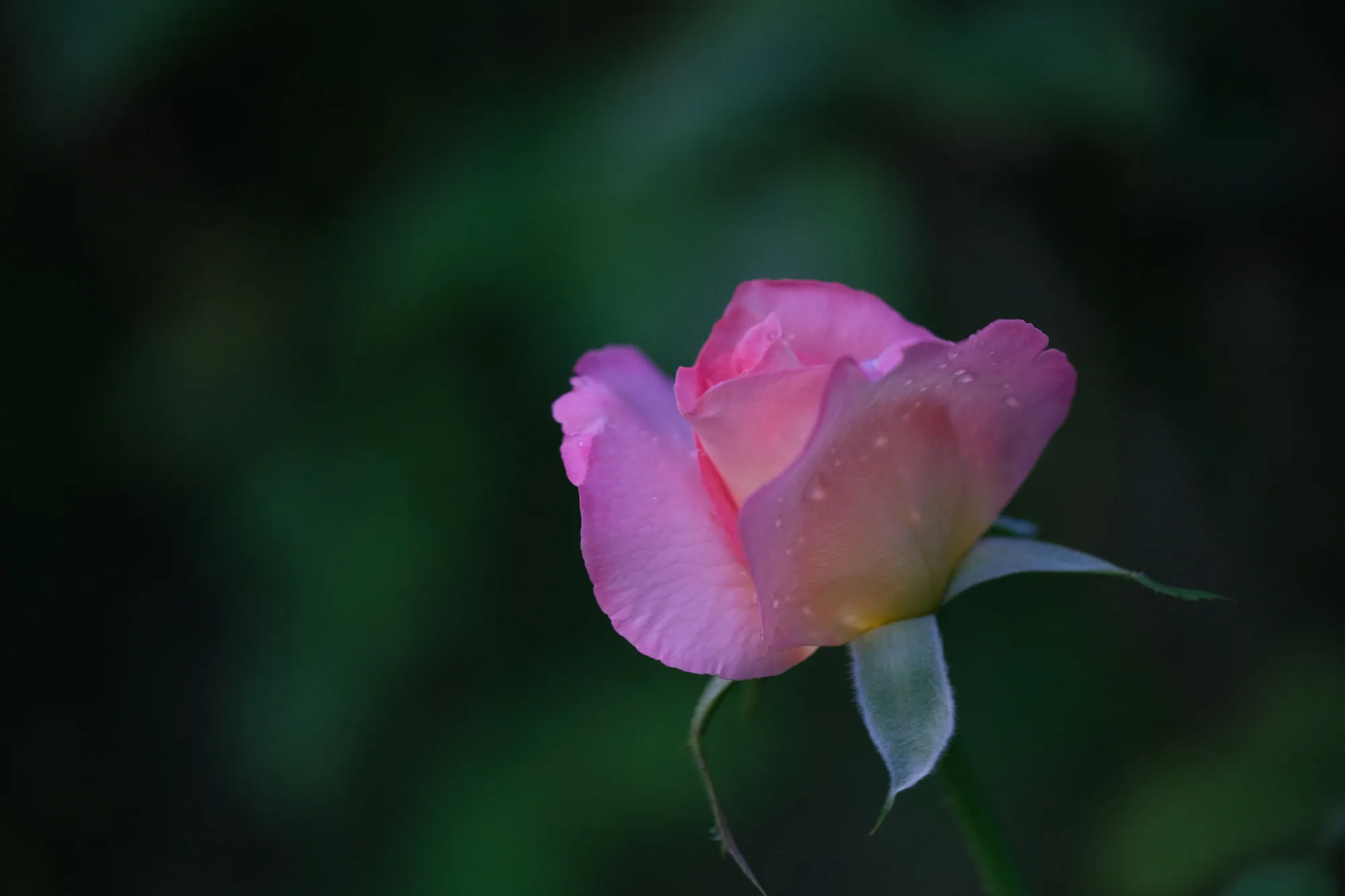
Most summer afternoons here it rains hard for twenty minutes and then quits. That's the best light I get all day, and it's in my own yard. Here's what I do with it.
Why I wait for the rain
The clouds that just soaked you are still sitting there, and they work like a giant softbox. Midday sun blows out a pale petal and drops everything else into shadow. After rain you keep the whole flower. Color goes deeper too, because wet petals throw back less glare.
Move fast though. Once the sun's out the yard dries in about half an hour.
The drops are the point
- Don't tidy them. Real rain leaves them scattered and uneven. That's what makes it look like weather instead of a spray bottle.
- Get light behind them. Backlit, a drop glows. Lit from the front it's a gray dot.
- Focus on a drop, not the petal. If the water's sharp, the photo reads sharp.
Killing the background
The rose up top grew in a normal garden with a boring hedge behind it. The background went dark and smooth because of distance, not luck. So I walk around the plant until nothing's close behind the flower, usually shooting slightly down across it, and let the shade do the rest. Dark beats bright here. A wet petal is already the brightest thing in the frame.
What I set
Nothing fancy. I don't own much gear, and this is a macro lens handheld, no tripod.
- Manual focus, or one AF point on the nearest drop. Autofocus hunts on wet petals.
- Around f/4 to f/5.6. This close, depth of field is already paper thin.
- Faster shutter than you'd think, 1/250 and up. Air that looks still isn't. I shoot a few frames of the same flower and one lands between gusts.
Roses hold water the longest, and ground orchids sit low enough to shoot across at eye level. Look past the flowers too, at a backlit leaf or a new frond still dripping. Most of the nature shots in my galleries came from a few steps outside the back door.